1. The Importance of Planning Before Installation
Optimizing a wine cellar doesn't start with choosing the bottles, but with rigorous thought about the structure. Whether it's a dedicated room or a temperature-controlled cabinet, every centimeter is precious. The first step is to take an accurate inventory of your current collection and anticipate your future acquisition rate. If you don't plan the necessary space for your primeur purchases or discoveries from wine fairs, you risk quickly saturating your space, which hinders air circulation—a vital element for thermal stability.
The 2D Plan Method
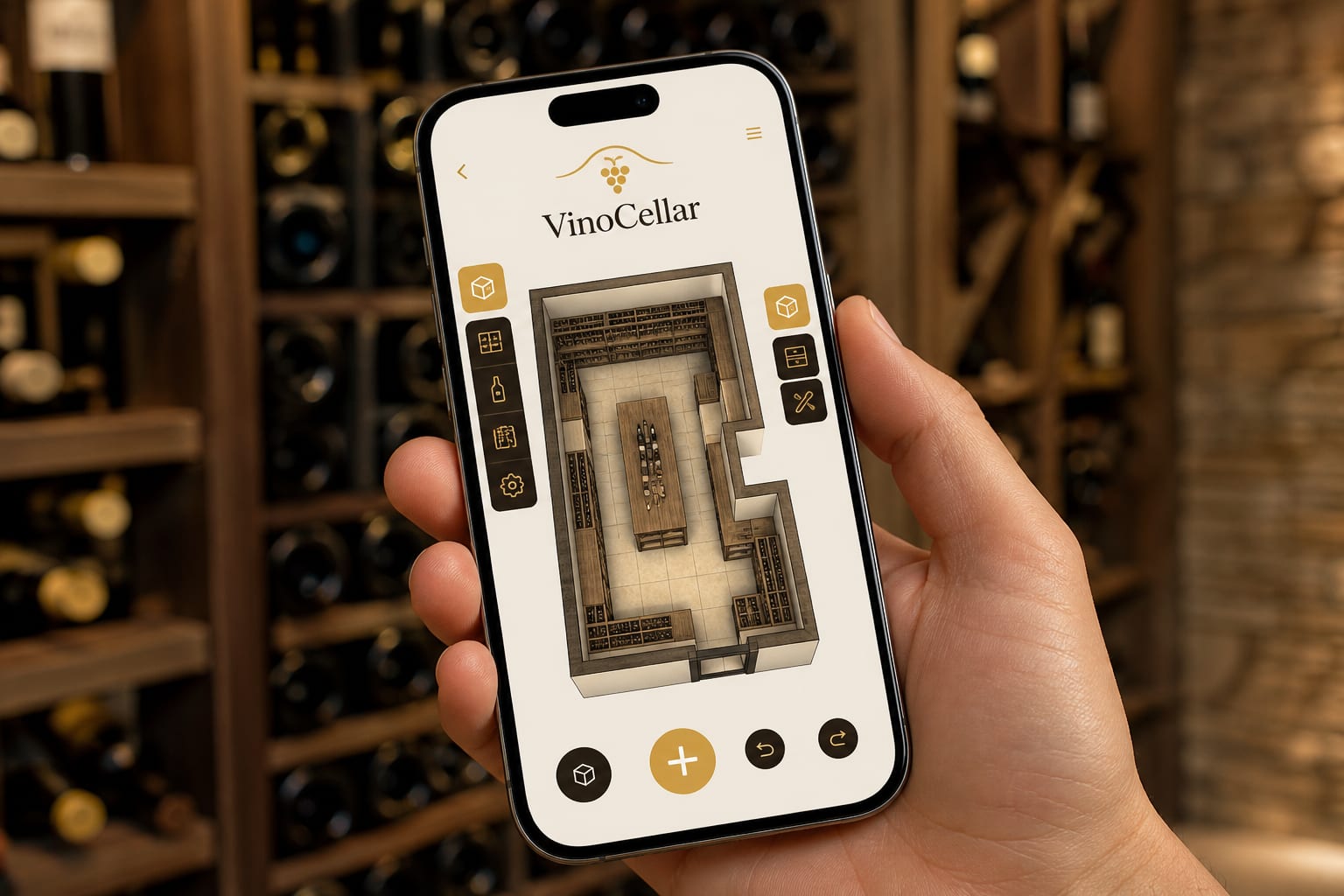
Drawing a 2D plan remains the most effective method for visualizing constraints. Identify cold zones, pillars, or ducts that could interfere with the installation. Using VinoCellar's planning features, you can simulate filling your shelves and identify dead zones.
Using digital tools allows you to project actual storage capacity based on the typology of your bottles. Champagne or Burgundy bottles, which are wider, take up more space than classic Bordeaux bottles, which requires strategic alternating in your storage to maximize the number of pieces per shelf.
2. Choosing the Right Shelving System
The choice of materials and the configuration of the shelves dictate storage density. To optimize a small surface, solid beech wood is recommended: it absorbs vibrations and provides natural thermal inertia. Opt for modular systems that allow for varying heights. Sliding shelves are ideal for accessibility, but they sometimes consume valuable space in thickness. For maximum density, consider head-to-tail storage.
Frequent Mistakes in Shelving
The most common error is wanting to store too many bottles on a single shelf, to the point of making handling dangerous. Smart management involves dedicating the bottom shelves to long-term aging wines, which are handled less frequently, and the middle shelves to everyday drinking wines.
Optimal Density
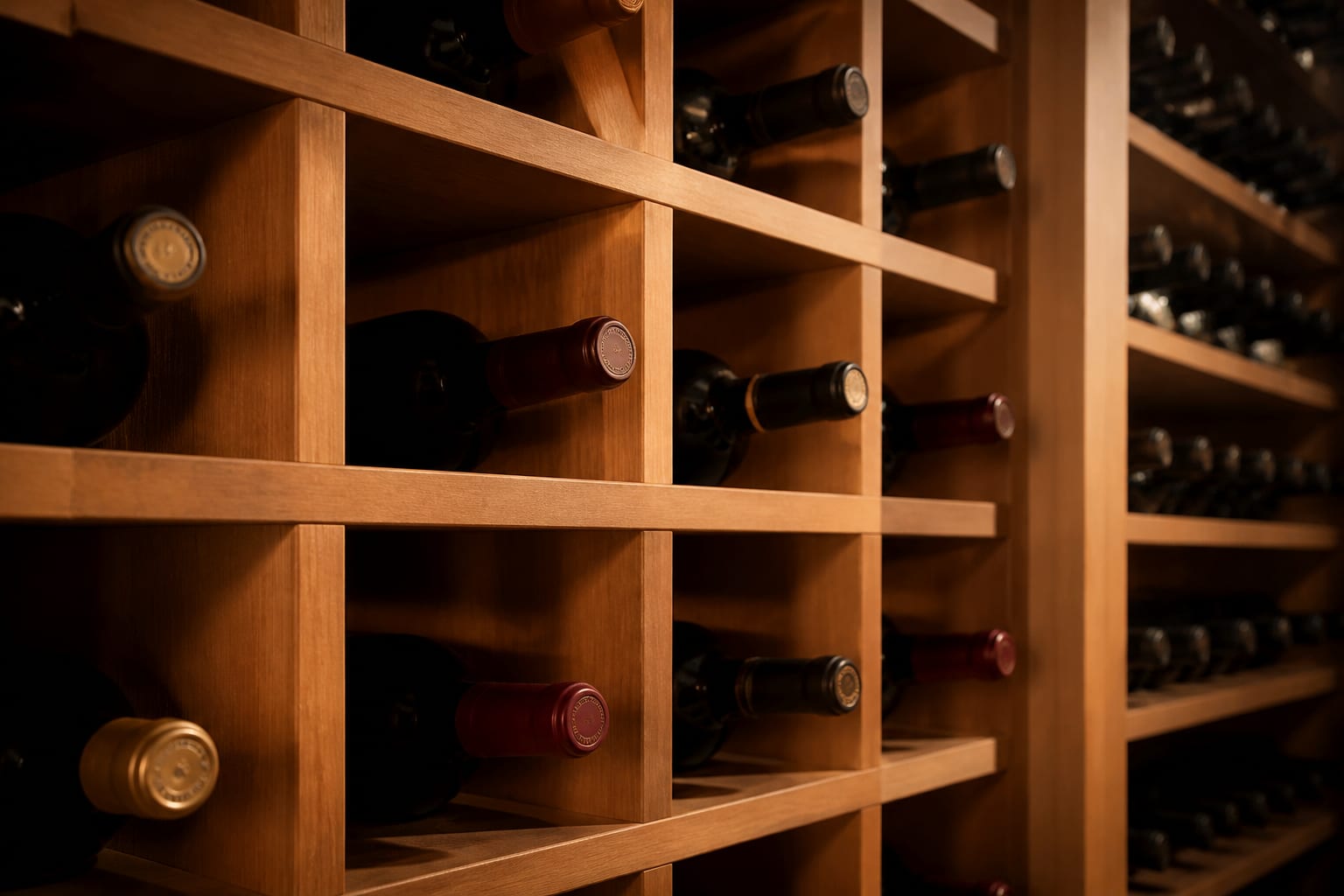
Head-to-tail stacking increases storage by 20%.
Quick Access
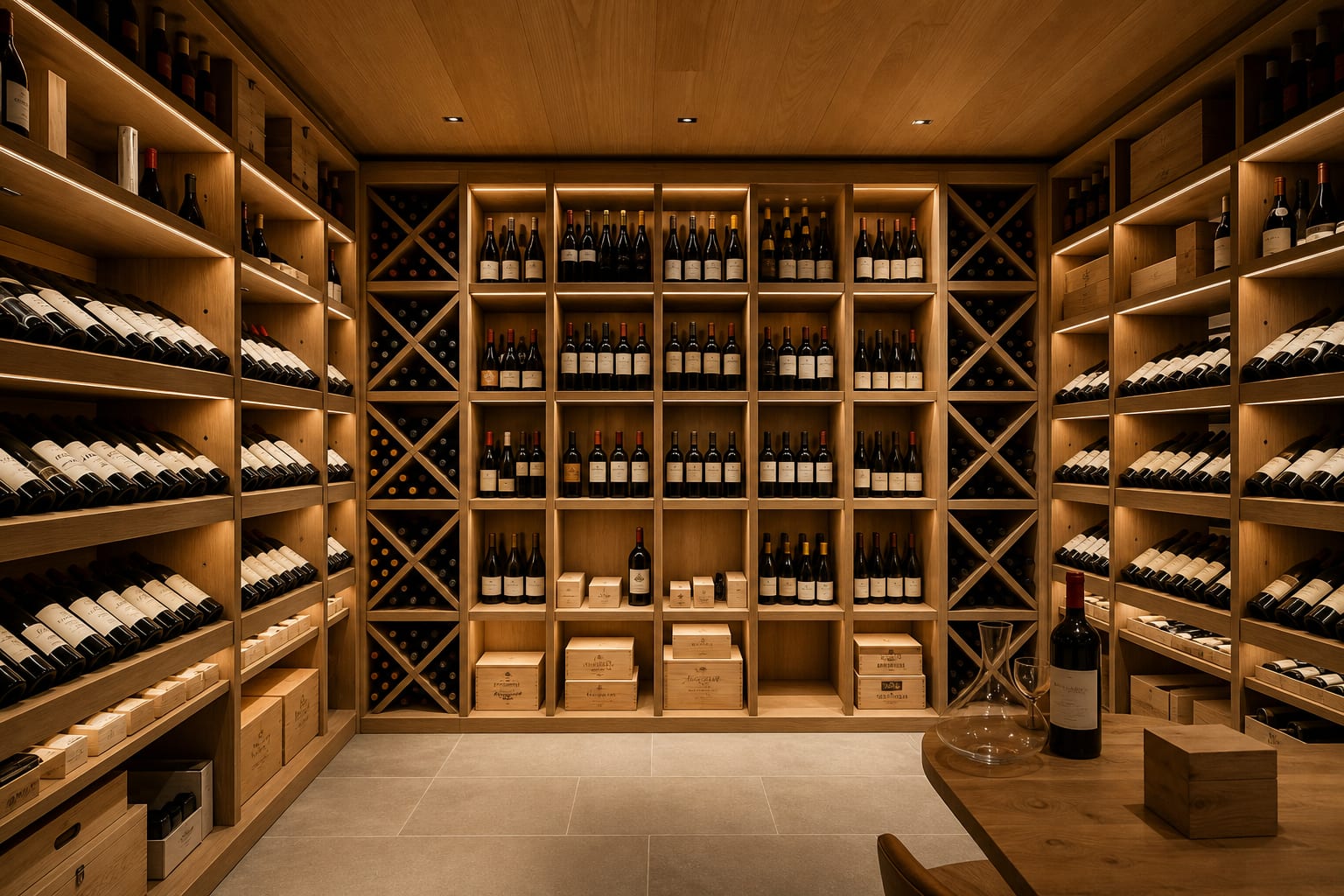
Keep your wines for immediate tasting at eye level.
3. Space Management Strategies with VinoCellar
Once the physical space is optimized, it is crucial to maintain this organization. Technology becomes your ally so your cellar doesn't turn into a mess where it's impossible to find a label.
:::fonce :::
Use the VinoCellar application to map your shelves. Each physical location in your cellar must correspond to a coordinate in the application. By entering your new acquisitions via the quick scan, you instantly know which space is available without having to open your cellar, thus avoiding unnecessary temperature fluctuations. ::
The 80% Rule
For optimal preservation, never saturate your cellar to more than 80% of its nominal capacity. An overly dense space prevents cold air from circulating evenly between bottles. This creates hot spots that can harm the wine's aging kinetics. Always keep a little breathing room, which also facilitates the rotation of your stock and the passage of hands when removing bottles.
Maintenance and Cyclical Organization
Finally, optimization is not a one-time action. Schedule a semi-annual reorganization. During these periods, clean the shelves, check the cabinet's door seals, and take the opportunity to reorganize your wines by region or maturity. A well-ordered cellar is a cellar whose contents are better preserved, as each bottle is moved only when it is ready to be tasted, thus limiting the thermal and mechanical stress imposed on the precious nectars.


Comments (0)