1. The science of the magnum: why does it age better?
The magnum, with its 1.5-liter capacity, is not just a festive or visually impressive format. It is, above all, a precision tool for the winemaker and the collector. The main reason for its superiority in terms of aging lies in the ratio between the volume of wine and the amount of oxygen present in the bottle neck.
In a standard bottle (75cl), the volume of air trapped between the cork and the wine is proportionally greater than in a magnum. This slight excess of oxygen accelerates oxidation reactions, causing the wine to evolve more quickly. In a magnum, this oxidation is slowed down, allowing the wine to develop with elegant slowness, unfolding tertiary aromas of a complexity inaccessible to classic bottles of the same vintage.
The magnum promotes increased thermal and chemical stability. Due to its thicker glass walls and larger volume, the wine is less sensitive to ambient temperature variations, which allows for more regular and harmonious aging kinetics over the long term.

2. Determining the aging potential of your magnums
Before deciding to open them, it is essential to consult your VinoCellar inventory. The optimal age for opening depends on the grape variety, tannic structure, and terroir. A Bordeaux Grand Cru will need 15 to 20 years to fully express itself in magnum, whereas a wine from the Loire or Burgundy may reach its peak much sooner.
The step-by-step method to evaluate your bottles:
- List: Record each magnum in your VinoCellar cellar with the purchase date and vintage.
- Analyze the vintage: A sunny and powerful vintage will require prolonged aging to soften the tannins. A cooler vintage will be accessible sooner.
- Follow the curve: Use the aging recommendations integrated into the app. If your wine is approaching the end of its tasting window, it is time to schedule it for a special occasion.
3. Signs that it is time to open
How do you know if the time has come? There is no exact science, but there are several physical and analytical indicators. Observe the color of the rim: a slightly orange or brick tint on the edge, for a red wine, is often a sign that the tannins have melted and that the tertiary aromas (undergrowth, leather, spices) have taken over from the primary fruit.
The evolving tasting experience
One must not forget that wine is alive. A magnum that begins to reveal notes of dried fruit, blond tobacco, or roasting is generally ready to be tasted. If you open a 75cl bottle of the same wine and it already seems a bit tired, that is the signal that your magnum is likely at its peak.
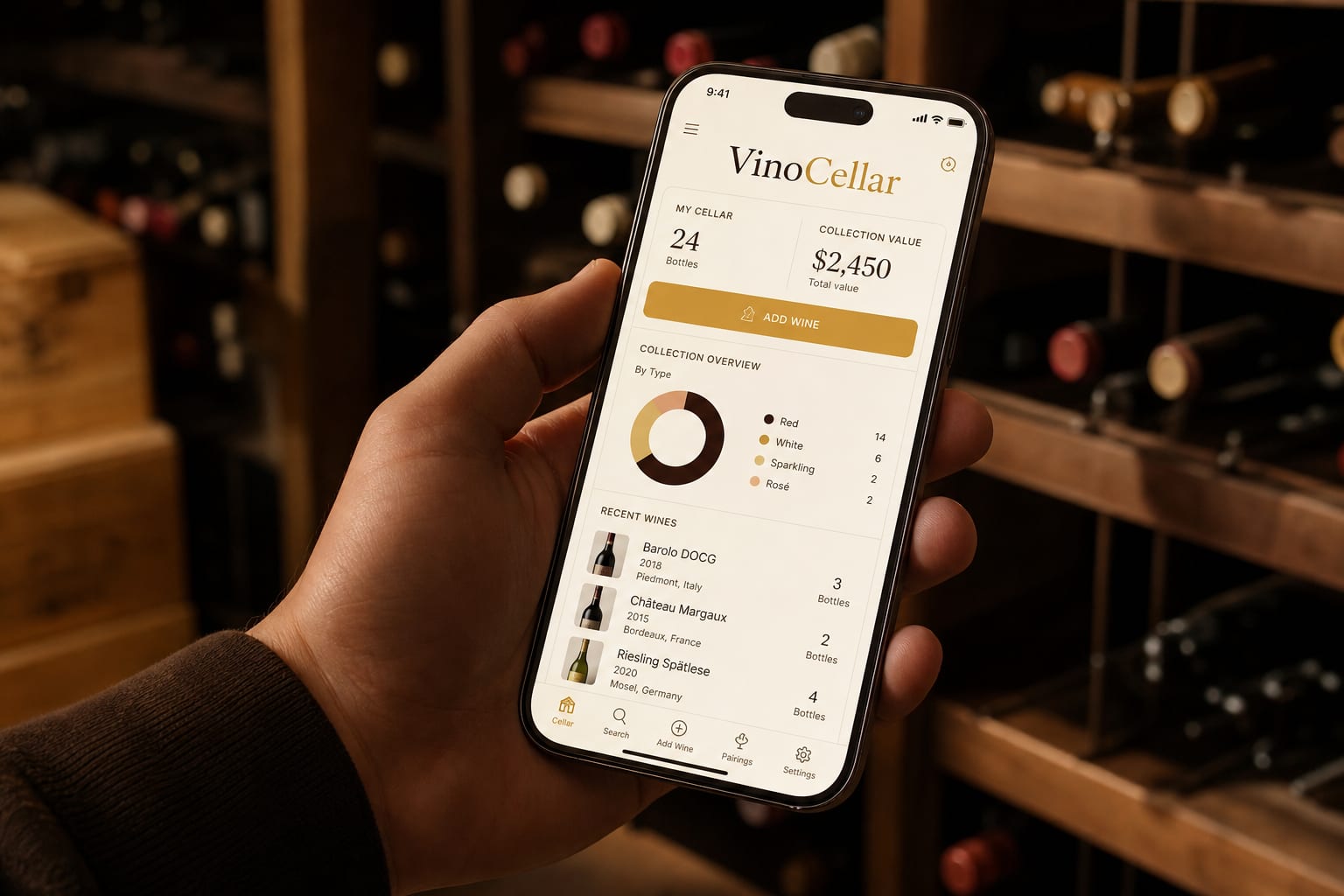
Cellar management
Use VinoCellar to precisely track your purchase dates and maturity.
Expert service
A magnum requires prolonged aeration to open up fully.
4. Preparation and service: the art of opening a large format
The most common mistake is to try to serve a magnum immediately after taking it out of the cellar. The size of the bottle requires a different preparation.
Practical tips:
- Resting: Place the magnum upright 24 to 48 hours before opening to allow the sediment to settle at the bottom.
- Temperature: Take the wine out of the aging cellar to bring it to its ideal serving temperature. A great red wine is served between 16 and 18°C. Do not place it near a heat source.
- Aeration: A magnum often needs more oxygen than a standard bottle. Do not hesitate to open it 2 to 4 hours before tasting, or use a large-capacity decanter to promote aromatic expression.
5. Why choose a magnum for your special moments?
Beyond the technical aspect, the magnum is the format of conviviality. It allows you to serve a larger number of guests with the certainty of perfect homogeneity in every glass. For a dinner of 6 to 8 people, the magnum is mathematically the most rewarding format. It is the opportunity to share a bottle that has traveled through time in optimal conditions, offering a depth on the palate that only slow maturation in a large container can produce.
Do not keep your magnums forever for fear of not finding the "perfect moment." The best moment is the one you create with friends who will appreciate the winemaker's work and the patience you have shown in the cellar. Use your VinoCellar app to note your impressions after tasting: this will help you, during future purchases, to adjust your aging preferences and build an even more precise cellar.


Comments (0)