1. Why is decanting essential for young wines?
Autumn invites us to enjoy more structured, rich, and often younger wines. However, opening a bottle immediately after uncorking sometimes leads to bitter surprises: a closed wine, aggressive tannins, or a hint of reduction. Decanting is not an art reserved for great vintage wines; it is a precision tool for young wine.
When you decant a wine, you create a physical interaction between the liquid and oxygen. This induced oxygenation allows the complex molecular structures that the wine developed during aging in the bottle to unwind. For a young wine, this step is liberating: it helps attenuate the austerity of tannins and releases primary aromas that would otherwise remain imprisoned within the matter.
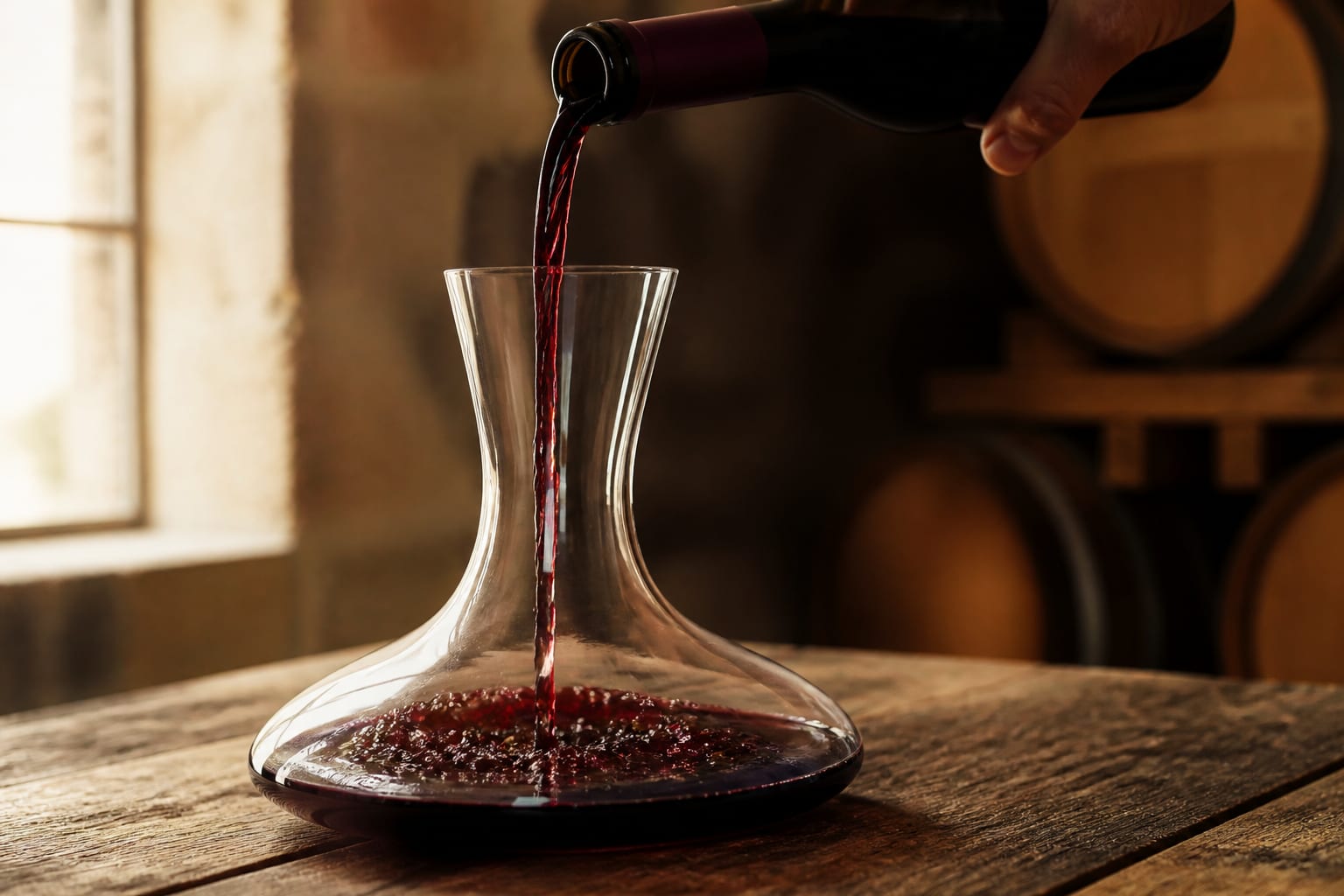
Passing the wine into a wide-based decanter drastically increases the surface contact with air. This forced "breathing" phenomenon accelerates the artificial aging of the wine by a few hours, simulating the years of cellaring the bottle lacks. It is the ultimate step to transform a wine that is too vigorous into a nectar ready to be enjoyed.
2. The difference between decanting and carafe aeration
There is a common confusion between these two practices. Decanting (sediment removal) is a precision operation intended for old wines presenting sedimentary deposits. Here, the goal is to separate the clear liquid from the deposits without over-oxygenating a fragile wine.
Conversely, carafe aeration, which we are discussing here, is an act of voluntary aeration. It is intended almost exclusively for young wines (less than 5 to 7 years old for structured reds). By using gravity and movement, we seek to "shake" the wine to give it breadth. If you have any doubts, check the technical sheet for your wine in your VinoCellar application. If the wine is young and powerful, decanting is recommended.
3. Step-by-step method for successful decanting
To succeed in this operation, there is no need to be a starred sommelier, but a few rules are necessary so as not to shock the wine.
- Choice of vessel: Use a carafe with a wide base. The width of the base is directly proportional to the oxygenation capacity.
- Temperature: Ensure your wine is at serving temperature. A wine that is too cold will not open up, even after two hours in a carafe.
- Serving: Pour the wine with some vigor. Do not seek delicacy here; let the wine slide along the walls so it spreads out and oxygenates upon contact with the air.
- Waiting time: For a young, tannic red wine, count between 1.5 to 3 hours before tasting.
Common mistakes to avoid
The major error is forgetting that wine has a limited lifespan once oxygenated. Decanting for too long, exceeding 5 or 6 hours, risks causing the wine to lose its fruit and vivacity. The wine then becomes "flat" and uninteresting. Use VinoCellar to note your decanting experiences: how long did it take for this wine to fully express itself?

Meticulous preparation
Use your application to check the ideal aeration time.
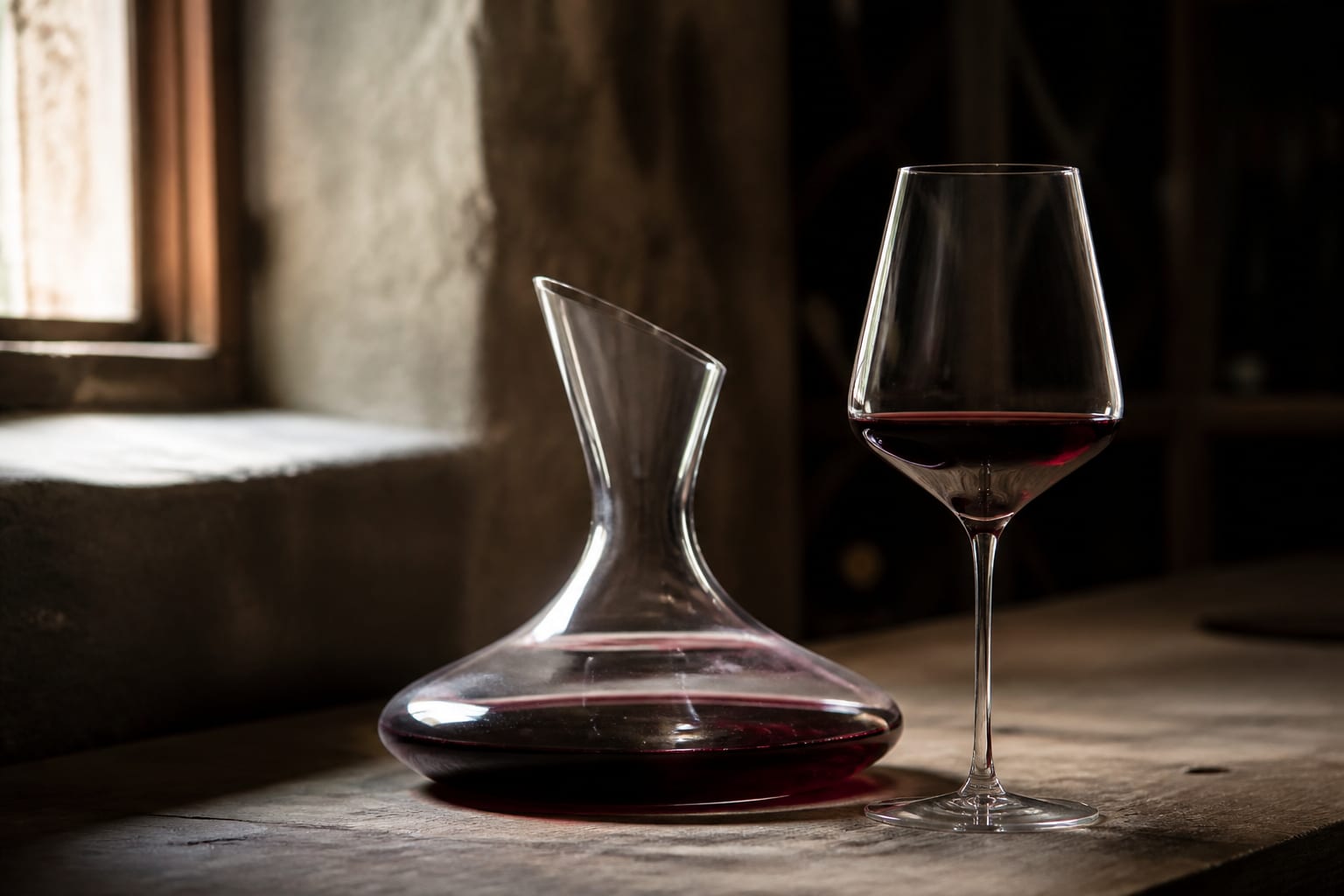
Controlled serving
Pour vigorously to promote the necessary oxygenation.
4. The importance of technology for the enthusiast
Tracking is the key to improvement. By using VinoCellar, you keep a precise record of the maturity of your wines. A knowledgeable enthusiast knows that every vintage evolves differently. By recording the opening date and decanting time in your tasting notes, you build your own sensory library.
Expert tip: If the wine still seems too closed after an hour in the carafe, do not add waiting time. Gently swirl the carafe with a rotating motion. This provides an additional dose of oxygen without over-stressing the wine's structure. ::
In summary, decanting is a dialogue. It requires your listening and observation. Never consider wine as a static entity once it leaves the bottle. Tame it, give it space to breathe, and you will discover unsuspected facets of your most beautiful autumn bottles.


Comments (0)