1. The Aromatic Universe of Mushrooms and the Importance of Structure
Mushrooms are products of the earth, a fascinating raw material that holds a central place in autumn gastronomy. Their organoleptic profile is dominated by notes of humus, undergrowth, hazelnut, and sometimes a hint of bitterness or a meaty texture. To accompany these complex aromas, the wine must not simply be "good"; it must resonate with the soil.
When we speak of structured wines, we refer to vintages with an assertive tannic frame, often resulting from aging in oak barrels, where the tannins have had time to soften. This is where your VinoCellar plays a crucial role: time is the main ingredient in transforming a powerful wine into an elegant partner for porcini or black trumpet mushrooms.
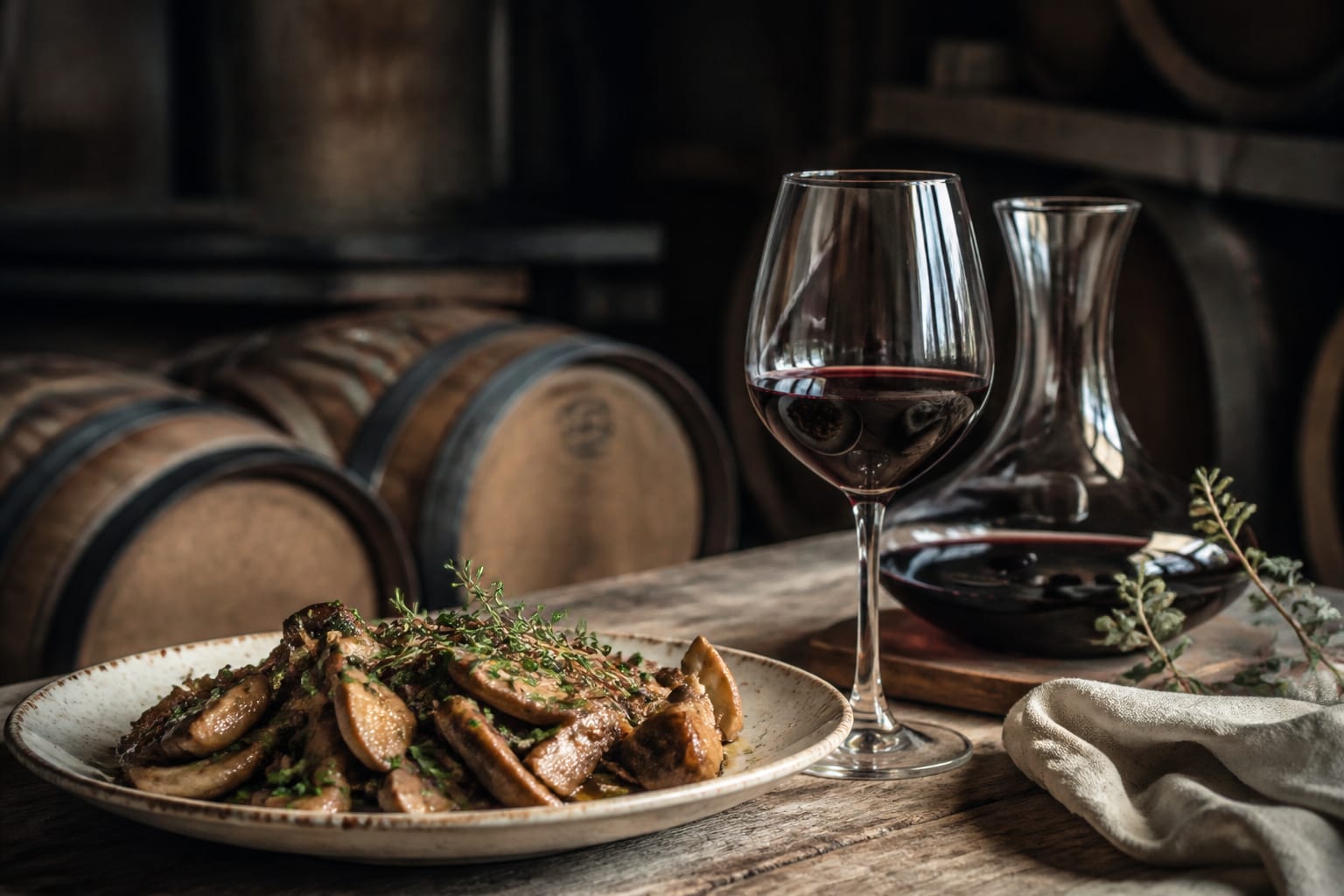
The encounter between a mature red wine and a pan-seared mushroom creates a unique synergy. The tannins, once prominent, have melted, allowing the wine to embrace the earthy side of the mushroom without ever overpowering it. The secret lies in choosing a wine whose acidity is still present to balance the richness of the butter often used in cooking.
2. The Main Families of Mushrooms and Their Cellar Companions
The Porcini: King of the Forest
The porcini, with its firm flesh and intense hazelnut taste, calls for wines with a certain power and evolved aromatic complexity. Great vintages from the Right Bank of Bordeaux (Pomerol or Saint-Émilion) with a few years of aging are natural allies. Merlot, with its notes of stewed red fruits and silky grain, perfectly complements the texture of grilled porcini.
The Morel: Queen of the Undergrowth
Although often associated with the yellow wines of the Jura, the morel pairs wonderfully with reds possessing a beautiful spicy structure. A Pinot Noir from Burgundy, with its aromas of fresh mushrooms, damp earth, and red fruits, is an exceptional choice. The finesse of Pinot allows for respecting the fragility of the morel's perfume.
The Black Trumpet and Chanterelles
Here, we seek wines with depth. Wines from the Northern Rhône Valley (such as a Cornas or a Côte-Rôtie) will provide those meaty and smoky notes that recall the wild character of these mushrooms. Ensure, however, that the wine is old enough so that the animal notes of the Syrah do not dominate the finesse of the mushroom.
3. Step-by-Step Method to Perfect Your Pairing
To ensure total success during your dinners, follow this simple method developed for VinoCellar users:
- Inventory and selection: Use the VinoCellar app to filter your bottles with at least 7 to 10 years of aging. Look for wines presenting tertiary notes (leather, undergrowth, tobacco).
- Product preparation: Do not drown your mushrooms in too much garlic or parsley. The mushroom must remain the protagonist. Simple cooking in brown butter, seasoned with a touch of sea salt, is ideal.
- Opening and aeration: A structured and mature wine is fragile. Open the bottle 30 minutes before serving, but avoid an aggressive decanter. A light decanting to separate the sediment is sufficient.
- Serving temperature: Serve your reds between 16°C and 17°C. A wine that is too warm would lose its structure and become heavy against the finesse of the dish.
VinoCellar Tip: When making your selection, consult the "Peak" tab in your application. Prioritize vintages entering their plateau of maturity to obtain that "humus" character so distinctive that it will elevate your mushrooms. ::

The Selection
Use VinoCellar to identify vintages with more than 8 years of aging.
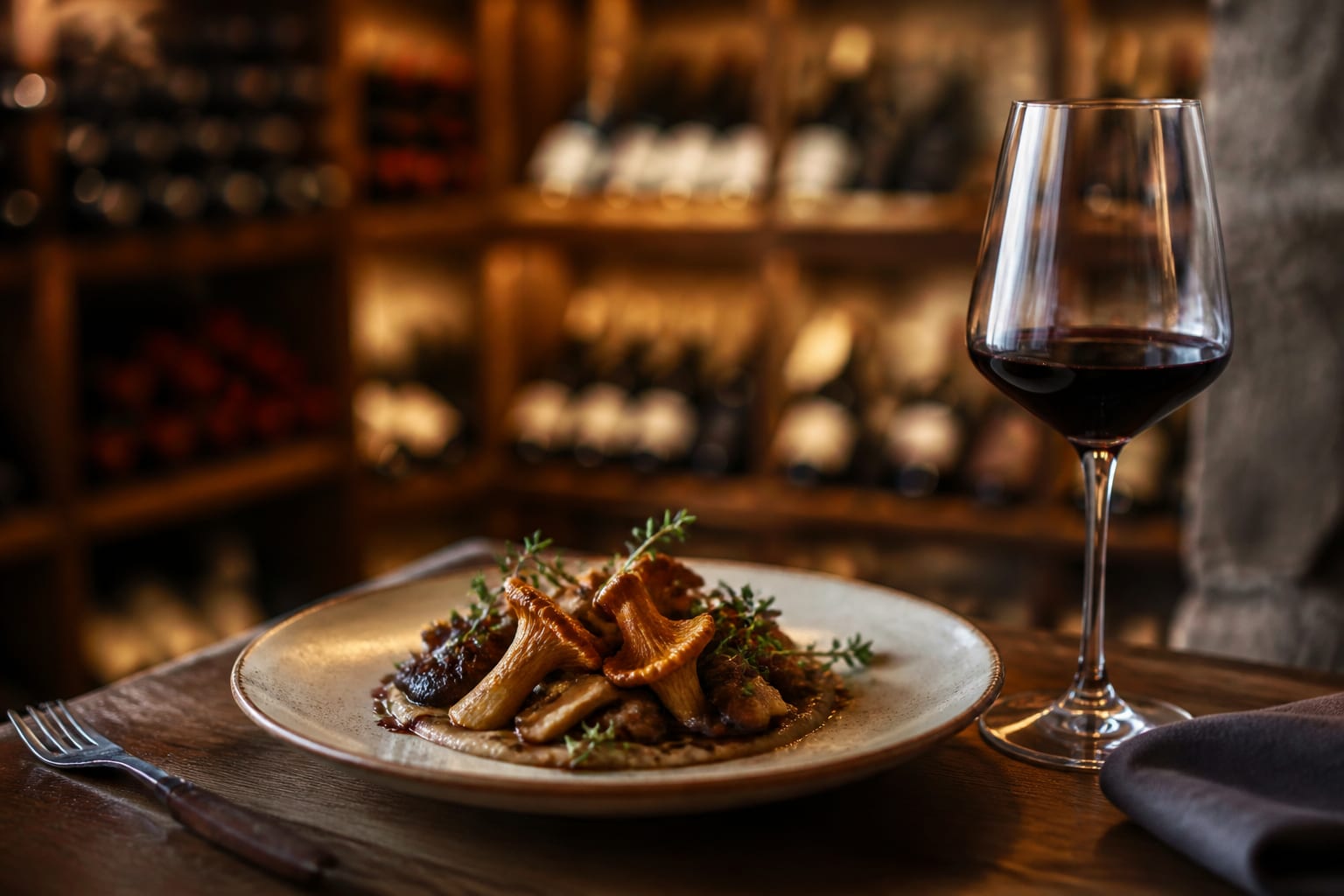
The Presentation
A refined dish will highlight the complexity of the wine and the earthiness of the mushroom.
4. Common Mistakes to Avoid
The first mistake is choosing a wine that is too young, whose tannins are still "green" or aggressive. These tannins will react negatively with the natural bitterness of certain mushrooms, creating an unpleasant metallic sensation on the palate.
The second mistake concerns accompaniments. If you serve your mushrooms with a sauce that is too creamy, the wine might appear too light. If you use cream, opt for a wine with brighter acidity, like a great Burgundy, to cut through the fat. Finally, do not forget to check the sediment in your cellar; an old wine must be handled with care so as not to disturb the liquid, which would alter the tasting.


Comments (0)