1. The Gastronomic Nature of Squash
Squash, whether it be pumpkin, butternut, red kuri squash, or spaghetti squash, possesses unique organoleptic characteristics: dense flesh, natural creaminess, and ever-present residual sugar. For the sommelier, the challenge lies in balancing this vegetal sugar with a texture that is sometimes fibrous or highly creamy (especially in soups).
The choice of wine depends primarily on the preparation. Roasted squash develops nutty and caramel notes, while a soup relies on creaminess. In any case, we look for wines capable of supporting this body without overpowering the vegetable's aromatic subtlety.
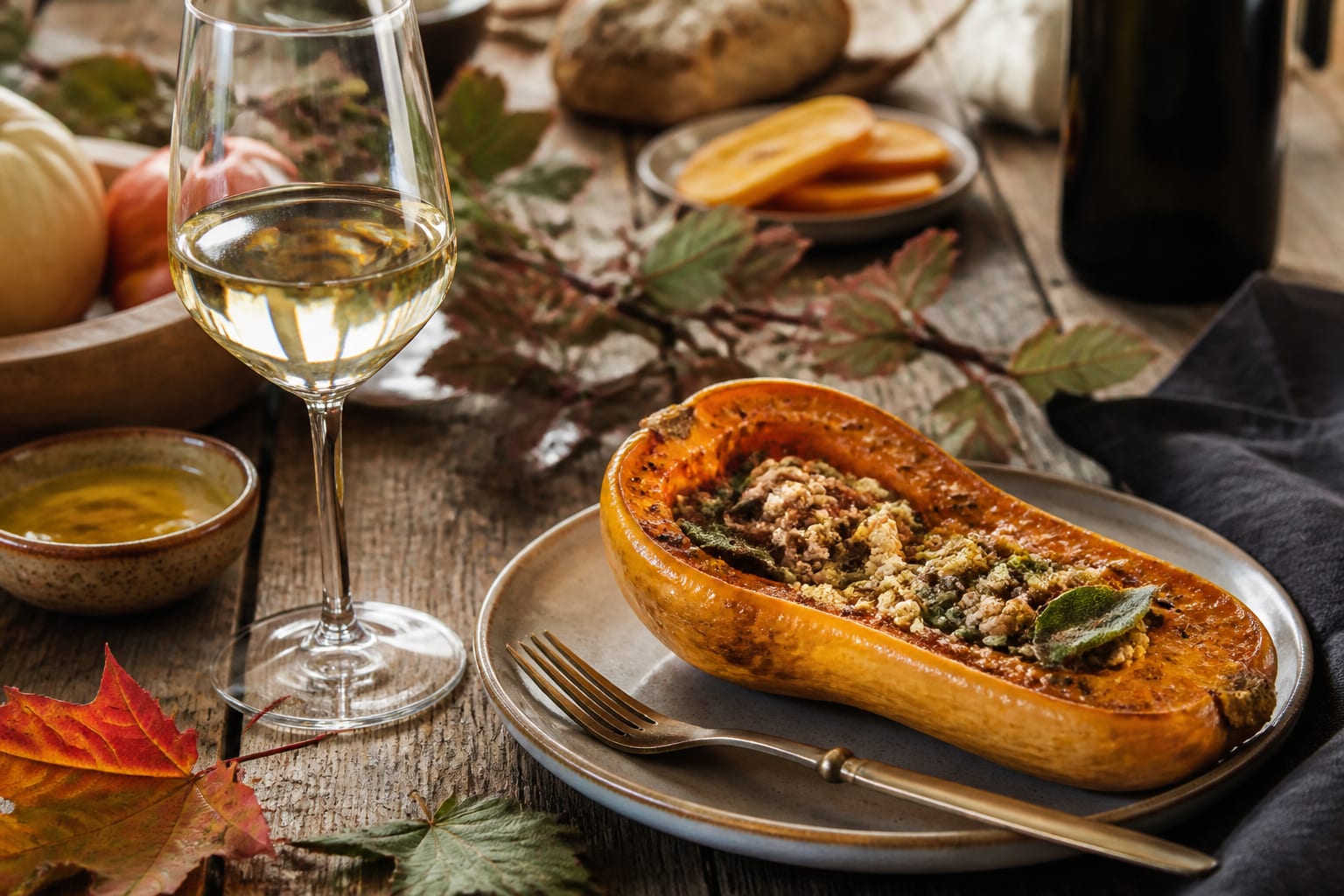
2. Rich Whites: The Logical Pairing
For creamy preparations, whites with high aromatic intensity and controlled oak aging are essential. The richness of the wine echoes the silky texture of the soup or gratin.
The Alliance with Chardonnay
A Burgundy Chardonnay, ideally from the Côte de Beaune or a well-ripened Mâconnais, brings buttery and nutty notes that merge with red kuri squash. Oak aging provides the necessary structure to stand up to the vegetable's sweetness.
Viognier and Rousanne: The Aromatic Choice
Viognier, with its notes of white flowers and apricot, is an ideal companion for a squash tart. The natural roundness of this Rhône grape variety compensates for the vegetable's sweetness, creating perfect harmony on the mid-palate.
3. Supple Reds: Avoiding the Tannin Trap
The classic mistake is choosing wines that are too tannic. Tannins, in reaction to the natural sugar in squash, can quickly taste metallic and drying. Focus on fruit-forward reds with fresh acidity.
Pinot Noir and Gamay
Pinot Noir, with its aromas of forest floor and red fruits, is the essential ally for herb-roasted squash. A wine with low extraction, prioritizing finesse, helps highlight the rustic character of the dish without masking its sweet taste. Gamay, particularly a Beaujolais cru like Morgon or Fleurie, offers the indulgence needed to accompany convivial autumn dishes.

To find that rare gem, use the VinoCellar app. By scanning your labels, you can filter by "aromatic profile" and select low-tannin wines for your autumn recipes.
4. Step-by-Step Method for a Successful Pairing
To compose your menus, follow this simple method inspired by our VinoCellar experts:
- Identify the texture: If it's a soup, go for a rich white. If it's a roasted piece, lean towards a light red.
- Evaluate the seasoning: Squash is often accompanied by spices (nutmeg, cinnamon, sage). If you use many aromatic herbs, choose a wine with good mineral tension to balance the dish.
- Consult your cellar: Do not hesitate to check the peak drinking window of your bottles. A slightly aged white wine (3 to 5 years) will often be more complex and better suited to the sweetness of roasted squash than a wine that is too young and too lively.
5. Errors to Avoid
Never fall into the trap of wines that are too powerful or high in alcohol. A high-alcohol red wine served with squash puree will make the dish heavy and crush all the sweet nuances. Likewise, avoid wines with too much new oak, which could mask the delicate and subtle taste of the vegetable.
White Wines
Prioritize creamy textures.
Red Wines
Look for suppleness and fruit.

Cellar Management
Use VinoCellar for your stock.
6. Conclusion
The squash season is a blessed time for wine lovers who enjoy exploring nuances. By sticking to balanced, pleasurable wines, you will transform a simple autumn vegetable into a memorable gastronomic experience. Don't forget to organize your bottles in your VinoCellar to easily find your best selections for every occasion.


Comments (0)