1. Understanding the Nature of Primary Aromas
Primary aromas constitute the first layer of a wine's complexity. Unlike secondary aromas (linked to fermentation) or tertiary aromas (linked to aging and maturation), primary aromas come directly from the grape variety and its terroir. They are the varietal signature. Learning to identify them is essential for every VinoCellar user who wants to understand what they are storing in their cellar.
These aromas are often classified into two major families: fruity notes and floral notes. In a young wine, these dominate the aromatic profile before time adds its patina to the liquid. The precision of your nose will depend on your ability to isolate these nuances without being distracted by alcohol or oak.
2. The Repertoire of Fruity and Floral Aromas
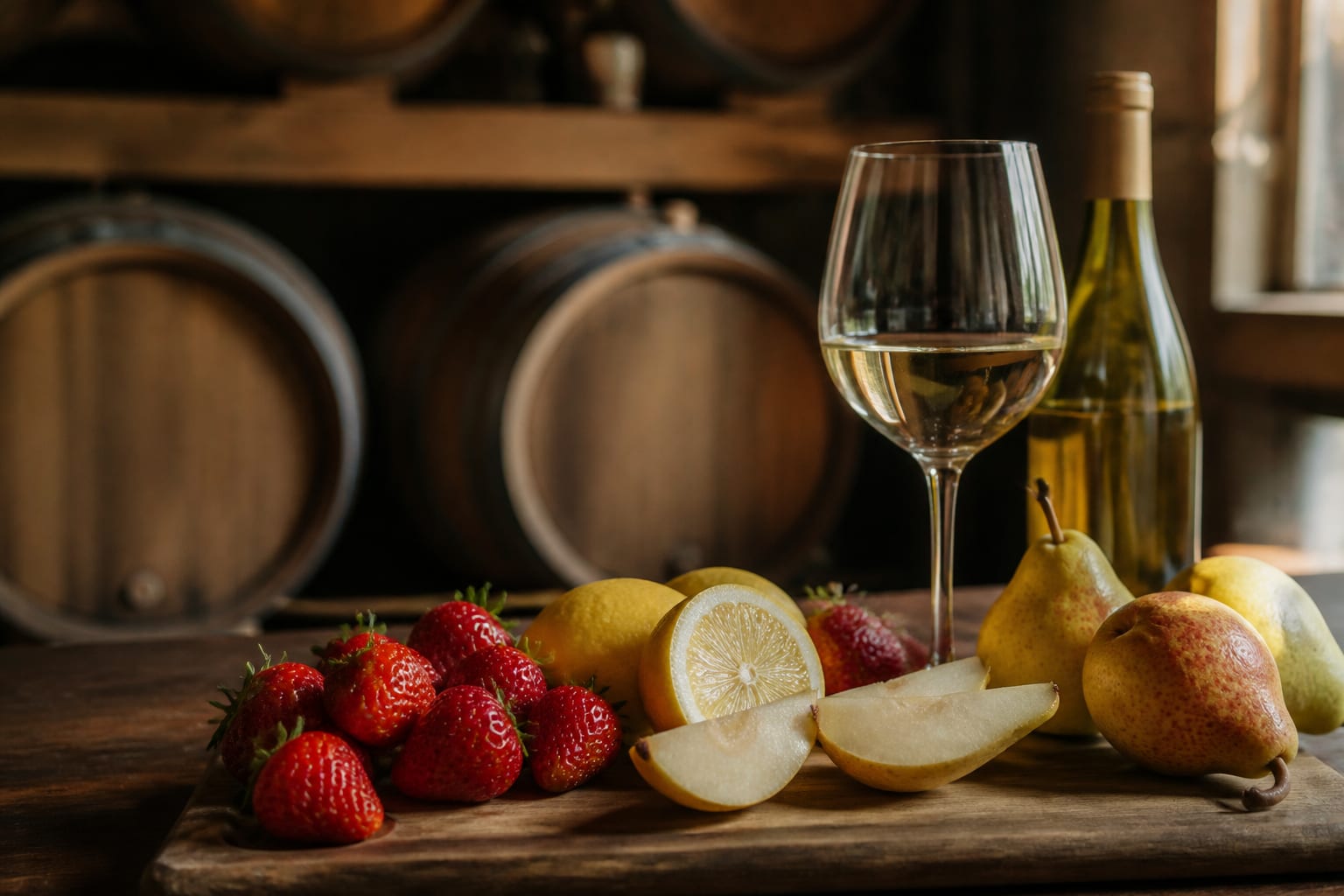
The world of fruit is vast. To get started, it is best to segment your search by color family. White wines often offer notes of white-fleshed fruit (pear, apple), yellow-fleshed fruit (peach, apricot), or exotic notes (pineapple, mango). Red wines, on the other hand, oscillate between fresh red fruits (strawberry, raspberry, cherry) and riper black fruits (blackcurrant, blackberry, blueberry).
Flowers, which are more subtle, provide elegance. One frequently finds notes of white flowers (acacia, linden) in dry white wines, and notes of violet or peony in certain red varieties like Pinot Noir or Malbec. The challenge is not to try to identify everything, but to recognize the dominant note that characterizes the grape variety.
3. Methodology: Training Your Nose Daily
Sense of smell is a muscle. To improve, it is essential to multiply your sensory experiences outside the wine glass. Smelling fresh fruit at the market, crushing a flower in your garden, or even working with aroma kits helps create a mental database. Olfactory memorization is the pillar of professional tasting.
When you taste, follow these three steps:
- The first nose: With the glass still, smell briefly. This is where the most volatile aromas are revealed.
- Aeration: Gently swirl the wine in the glass to release the aromatic molecules.
- The second nose: Dive your nose into the glass and try to isolate one single, precise note (e.g., "is it fresh strawberry or cooked strawberry?").
Using VinoCellar allows you to record these discoveries. By logging the aromas detected during your tastings, you create a personal history that will help you better predict the evolution of your bottles in the cellar.

4. Practical Exercise: The "Olfactory Memory" Test
For this exercise, choose three wines of very different styles: a Sauvignon Blanc (aromatic and floral), an unoaked Chardonnay (white-fleshed fruit), and a Beaujolais (vibrant red fruit).
- Step 1: Pour a small amount of each wine into identical glasses.
- Step 2: Use your VinoCellar app.
- Step 3: Smell the first glass without looking at the label. Record the first word that comes to mind in the "Tasting Notes" section.
- Step 4: Compare your feelings with the theoretical description of the grape variety.
The classic mistake is to look for complex aromas on the first sniff. Be simple. Start with the broad families (fruit, flower, vegetal) before trying to specify the type of fruit.
5. Traps to Avoid
The first trap is the influence of temperature. A wine that is too cold "closes" the nose; the primary aromas remain trapped in the liquid. Ensure you taste at the correct temperature, a parameter you can easily track via VinoCellar for every bottle in your cellar. The second trap is olfactory fatigue: never test more than 5 or 6 wines in a row without taking a break. Breathe fresh air or your own skin to "reset" your receptors.
Finally, do not let yourself be influenced by the price or the label. Primary aromas are biological and chemical; they do not lie. Trust your initial feeling, even if you think you are wrong. Precision comes with repetition.
Observation
Analyze the color and texture before smelling.
Memorization
Use VinoCellar to archive your notes.
Sharing
Compare perceptions with other enthusiasts.


Comments (0)