1. The Fragility of Wine: Understanding the Challenges of Time
Storing wine, especially when it comes to old vintages or "fragile" cuvées (low-sulfite wines, delicate grand crus), is not a passive process. Contrary to popular belief, wine does not just "sleep" in the cellar. It lives, it evolves, and every external parameter can alter its complex aromas. Fragility is intrinsically linked to the wine's chemical balance. An aged wine has exhausted part of its natural protection against oxidation; it thus becomes a sentinel sensitive to the slightest thermal shock.
Why are some wines more sensitive than others?
Unfiltered wines, natural wines, or those with low sulfur dioxide levels are particularly vulnerable. Their balance is precarious and can be disrupted in a matter of weeks by poor humidity or stray light. For aged wines, it is the very structure of the material that refines, becoming more ethereal, but also more prone to disintegrating under the slightest physical stress.
2. The Scourge of Vibrations: A Silent Killer
Vibrations are the number one enemy of sedimentation. In a home cellar, proximity to a washing machine, a boiler, or a high-traffic area can create micro-vibrations that are imperceptible to humans but devastating to wine. These tremors resuspend the lees (sediment), preventing the wine from stabilizing and prematurely accelerating its oxidation.
To protect your most precious bottles, it is imperative to place them on anti-vibration racks or on inert surfaces. Absolutely avoid placing crates directly on a concrete floor if it is located near a traffic area. Using high-density rubber mats under your shelves can be an excellent shock absorber.
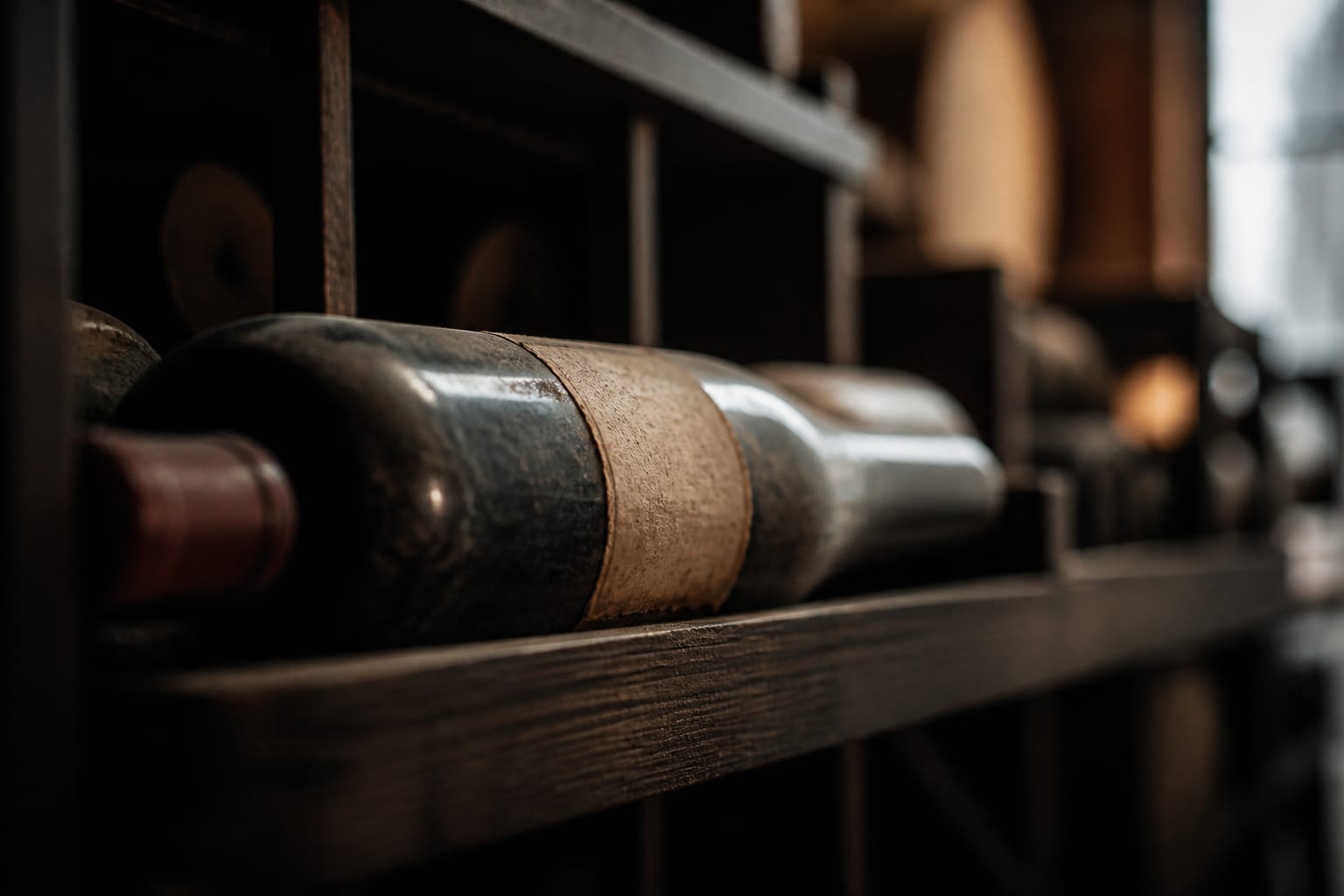
How to detect vibrations in your cellar?
A simple trick is to place a glass of water filled to the brim on the shelf where your wines rest. If the surface of the water shows constant ripples when people walk by, your area is too unstable. Use the VinoCellar app to map your bottles: place the most fragile wines in the most stable areas, ideally in corners opposite to sources of vibration.
3. Temperature and Humidity: Stability Above All
The golden rule is consistency. A temperature that fluctuates from 12°C to 16°C is not necessarily fatal, but it must happen slowly, over several months, in rhythm with the seasons. It is the rapid and brutal variations that kill wine. A fragile wine does not like thermal shock.
Hygrometry: The Guardian of the Cork
A humidity level between 60% and 80% is essential to maintain the elasticity of the cork. If the air is too dry, the cork shrinks, lets oxygen in, and your wine ages prematurely. If you use a VinoCellar cellar, ensure that the humidity containers are regularly maintained.
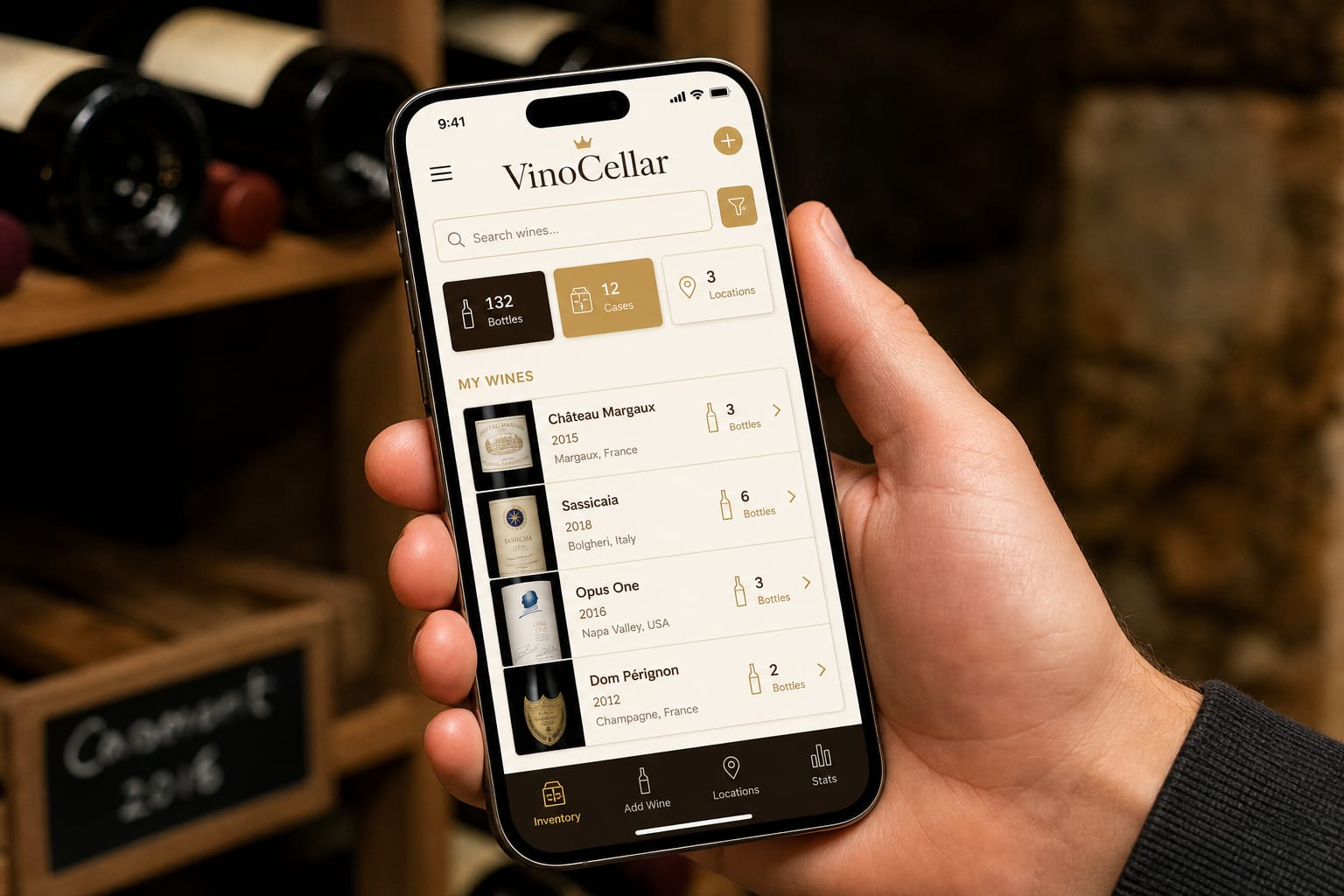
Total Control
Use VinoCellar to monitor your storage conditions in real-time.
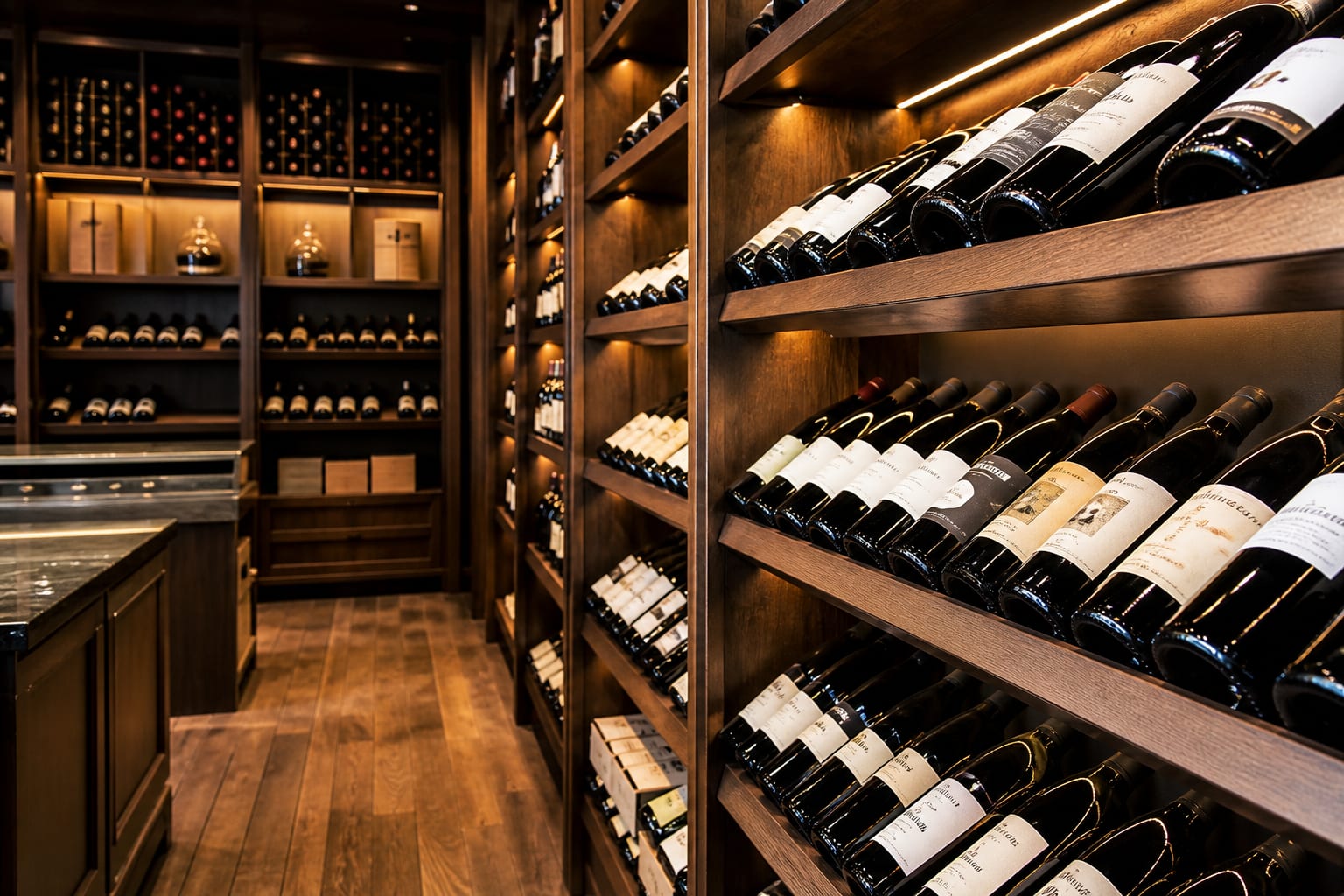
Organization
Catalog every vintage to limit the time the door is kept open.
4. The Step-by-Step Method to Protect Your Treasures
Managing a collection cellar requires a rigorous method to avoid unpleasant surprises when opening a great bottle.
- Inventory and Classification: Separate "robust" aging wines from "fragile" wines. VinoCellar allows you to add custom labels.
- Strategic Positioning: Place fragile wines at the bottom of the cellar, where the temperature is most stable and vibrations are lowest.
- Access Management: Avoid handling old vintages unnecessarily. If you must move one, let it rest vertically for 24 hours before opening so the sediment can settle.
- Regular Monitoring: Use the app to note the date of the last visual inspection of the label and the wine level.
5. Common Mistakes and How to Avoid Them
The most common mistake is storage near chemicals (paint, solvents, cleaning products). Vapors can pass through the cork and alter the wine's taste. Another mistake is light: "light strike" (goût de lumière) is a real chemical alteration. Ensure that your home cellar is completely free of natural light or, failing that, that your bottles are protected by cardboard cases or dark tissue paper.
By following these recommendations and using the digital tools provided by VinoCellar, you can transform your home cellar into a true sanctuary for your most delicate wines. Patience is the collector's final virtue: let time do its work, in silence and darkness.


Comments (0)